Preface
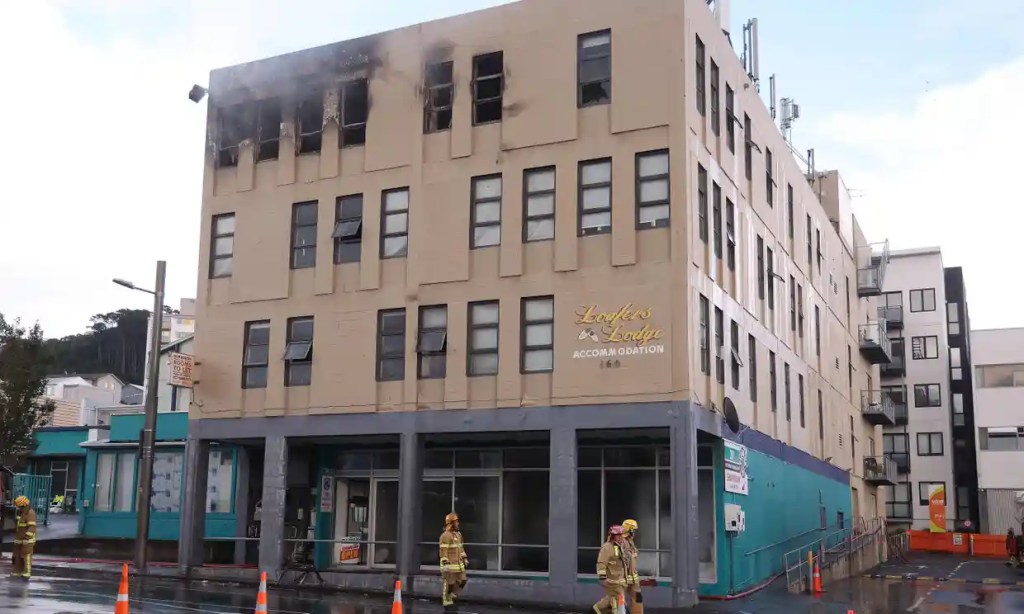
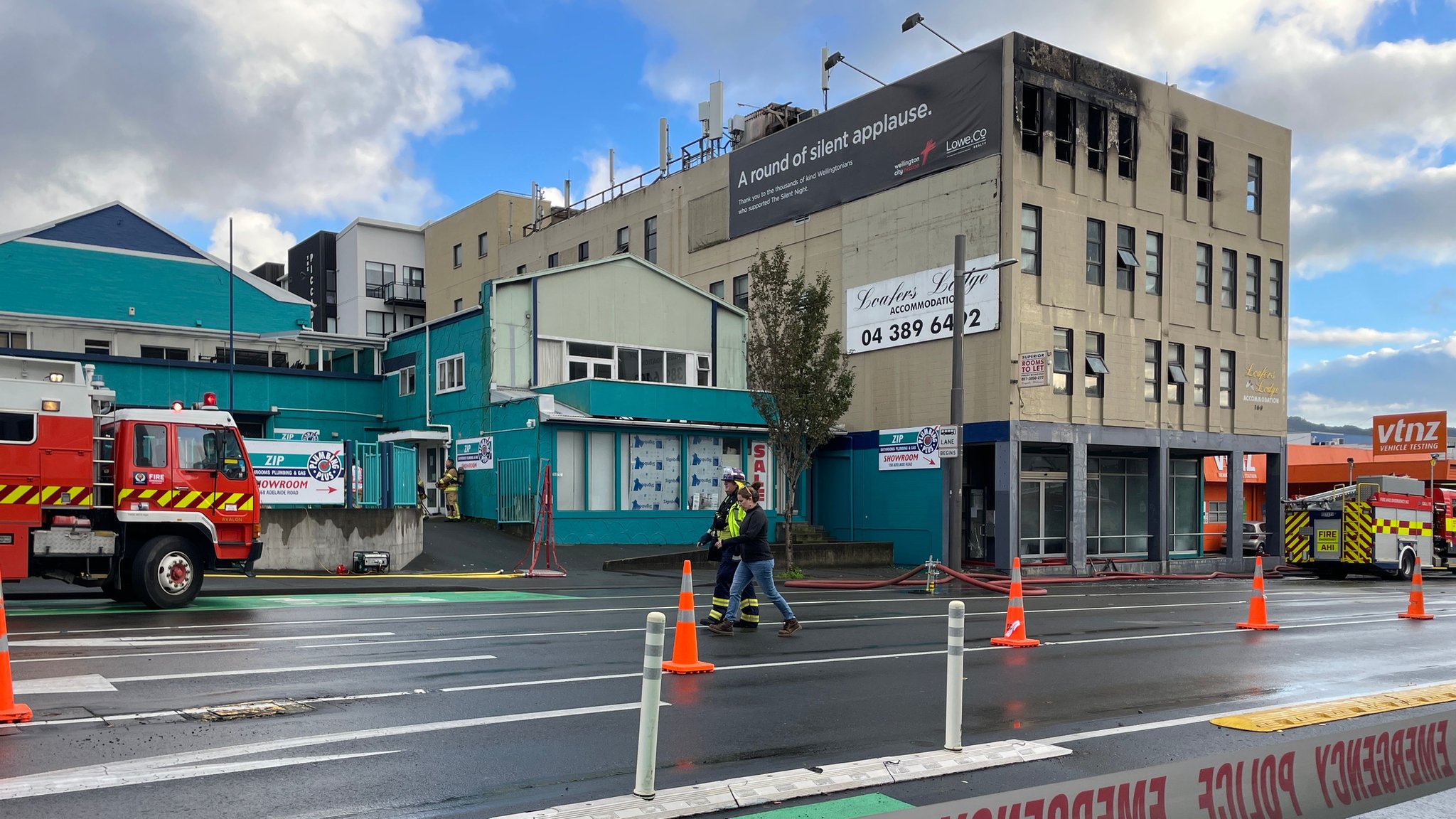
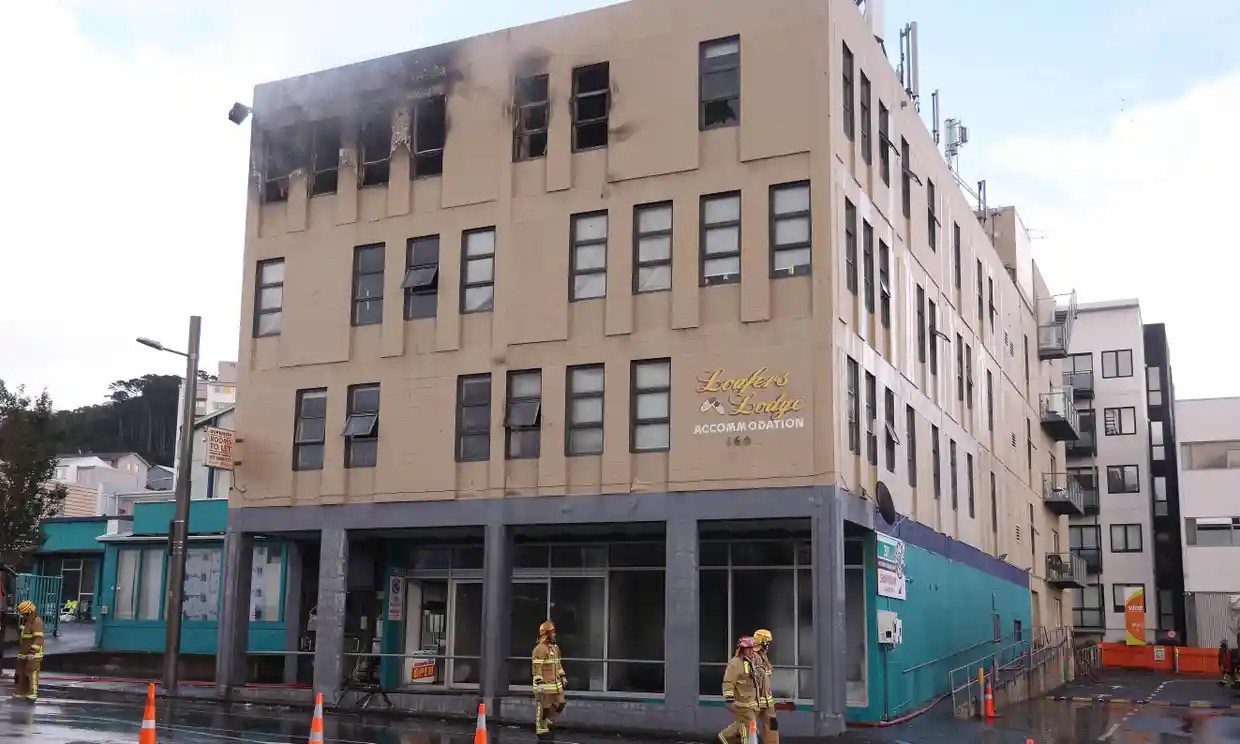
In the early morning hours of 16 May 2023, a fire now attributed to arson erupted at Loafers Lodge, a boarding house, or hostel, in Wellington, New Zealand. Five individuals perished in the fire, and scores more were displaced, taking only the possessions they wore or managed to grab as they escaped. Asbestos contamination of the building’s remains means that cell phones, childhood photographs, and immigration papers left behind will likely never be retrieved.
This paper contemplates public accountability in the wake of a disaster. Accountability is synonymous with neither culpability nor fault, although it does help to understand the webs of responsibility for a disaster such as this.
The series of events which culminated in this tragedy have unfolded over decades, including a chronic under-supply of new housing, but also perhaps attitudes towards a society’s most vulnerable. I myself have walked past this building multiple times, in the years between 2013 and 2023, and never realised it was housing. Residents, it seems, were out of sight and out of mind, socially. Yet, incidentally, those who perished where a veritable ‘who’s who’ of Wellington, including a former barrister, former BBC journalist and erstwhile friend of the current Prime Minister, the brother of a renowned tennis star, and a street juggler who was a fixture downtown for decades, and whose loss prompted individuals to create a spontaneous shrine in the spot he used to juggle at daily.
Yet, a person’s social identity or standing is incidental to their essential human dignity. Nurses, refugees, and ex-convicts were among the building’s other residents, and every one of them deserved a safe place to call home.
This piece is about government accountability, but any government is only as empowered as the society who holds confidence in it. The accountability question is critical, but so to is the one that asks, ‘what kind of society are we that accepts such a housing situation to be acceptable’? The indictment is not local to New Zealand, as housing costs across the Western world spiral out of reach for many. But it should spur deep individual and collective reflection about the way forward.
So, who’s accountable? It’s complicated.
Accountability is an area of great breadth. At its most basic, it is “about a person rendering an account, or answering, to someone else for his or her actions of conduct” (Boston and Gill, 5). In the public realm, representatives and officials are accountable to the public, whose confidence legitimises their power to make decisions on behalf or in service of the public.
Being accountable, in turn, means embodying and animating accountability. As a noun, accountability is static; transformed into a verb by human animus, it gives rise to decisions, actions, and “behaviours such as truthfulness, respect, and fairness,” which establish and maintain public trust (Controller and Auditor-General, 4). It demands personal integrity and a respect for the forum in which the accounting is rendered.
Minsters and Chief Executives particularly, given their positions of power and trust, must be seen as being accountable. That accountability can flow downward through an organization, but accountability can also flow across organisations – and across time. For instance, Acts pass through multiple iterations and layers of scrutiny before ascending into law. Thus, multiple individuals over periods of time can be considered accountable for an Act.
In an operational context, frameworks govern accountabilities and their relationship structures; however, instances can arise where the need for accountability could not have been reasonably foreseen. The 16 May 2023 fire at Wellington’s Loafers Lodge, a 92-room boarding house that housed a population without other accommodation options, illustrates the challenges in establishing and managing accountability in context of a crisis.
Boston and Gill suggest that “in the absence of the ability to impose direct rewards and sanctions, no formal accountability relationship exists (7),” but public accountability can be implicit. Loafers Lodge was deemed compliant and the laws in question appeared sound based on precedent. There was no identified need for a change in performance or policy, but there is certainly accountability to be taken in the wake of the disaster.
When the viewing platform at Cave’s Creek collapsed in 1995, killing 14 people, the Government’s line of accountability was clear. A project of Department of Conservation (DoC), the platform was “reportedly associated with significant ‘accountability failures’” (Controller and Auditor-General, 25) including faulty construction practices and a failure to adhere to building regulations. Two inquiries resulted; DoC underfunding shouldered much of the blame while staff and management were absolved, and consequently “there was a sense that the response by the government did not balance the loss of life that had occurred” (Scott, 136, 140). The loss of life at Cave Creek was egregious and preventable.
The loss of life at Loafers Lodge was likewise not inevitable, but the circumstances of the disaster are much more complex, spanning regulatory, monitoring, and implementation functions, and reflecting policy and maintenance decisions taken over decades. At a macro level, a chronic under-supply of affordable housing means individuals are being housed in structures that are not built for purpose. The current Government recognizes this as a crisis and has pushed residential construction to its highest rate since 1974 (Gibson, 2020).
Yet, this does not absolve the Government of accountability for Loafers Lodge, for “if the failures are serious enough, the public expects the ministers to be politically accountable even if they did not have any direct influence over the cause of the failure.” (Scott, 124). The public would be right to question boarding house facilities and regulations; however, the current alternative is the street, laying Government’s moral conundrum bare.
The Government’s accountability extends further. It is vicariously accountable for historical decisions contributing to this outcome, including persuasion by lobbyists on building standards or housing matters. It must also answer to community groups like The Salvation Army, who have “raised concerns about boarding houses for nearly two decades, having been consistently troubled by their overall safety, lack of regulation governing their practice, and the lack of ownership or leadership from authorities around who should be monitoring these houses” (Tanielu, 2023). Such an indictment underscores the failing of Government over time to procure safe housing supply, and calls into question whether it has been listening to the concerns of its constituents.
The macro level sets the broad context for the disaster, but the micro level is likewise complex. With Cave Creek, the failures were clear: the platform “was in violation of building regulations,” (Scott, 136). Loafers Lodge was not; it operated as a hostel for decades, complied with the Building Code and recently passed a building warrant of fitness. The Acts which govern the building and its operations have also been in force for decades. If the building is sound, and the policy is sound, how could such an eventuality have occurred?
The truth of the situation will be a kind of wicked problem to unravel. The alleged arsonist is the obvious accountable party, insofar as having started the fire itself. Yet multiple agencies will bear account, including:
- The Ministry of Business, Innovation and Employment (MBIE), who maintain the Building Act 2004, Building Code, and Building Regulations, which set a standard of compliance for construction, maintenance, and use. The calculus by which it looks “at how the building regulatory system protects lives at an acceptable level of risk and cost” (MBIE, 2015, Building and maintaining New Zealand’s homes and buildings) may also be called into account.
- The Ministry for Housing and Urban Development holds the Residential Tenancies Act 1986, under which Loafers Lodge met the definition of a boarding house and was required to install and maintain smoke alarms at prescribed locations; policy settings may need revision regarding boarding house tenancies.
- Fire and Emergency New Zealand (FENZ) (Fire Safety, Evacuation Procedures, and Evacuation Schemes) Regulations 2018 do not require a boarding house to install sprinklers, which “would have made a difference” (Chin, 2023). The provision of sprinklers may become a requirement, in turn raising questions about the viability of retrofitting old buildings and the “acceptable level of risk and cost,” per MBIE. Questions have also been raised about the age and state of the fire truck fleet, since the nearest suitable response vehicle was across town, adding valuable minutes to its response time (Hunt and Chin, 2023).
- Wellington City Council, who issue building warrants of fitness and recently deemed the building compliant (Hunt and Chin, 2023), must account for this judgment.
Within these organisations will be a network of policy makers, managers, and senior leadership answering to relevant Ministers. If “joint or shared accountability is common…in the field of public sector management” (Boston and Gill, 1), then each can potentially be considered accountable, without being culpable.
Further complicating lines of accountability are the private interests of the building owner and business operator. A former tenant alleged that the owner “didn’t want to put money into” fixing a fire alarm system which tripped so regularly the tenants ceased taking it seriously (Gourley, 2023). A resident “claimed one of the lodge’s two stairwells was blocked,” and that a broken stairwell door had been sealed shut (White and Macdonald, 2023), both in contravention of FENZ (Fire Safety, Evacuation Procedures, and Evacuation Schemes) Regulations 2018. The director of Loafers Lodge declined media questions about “the building’s condition or fire safety,” while the manager “did not respond to phone calls” (Gourley, 2023). One imagines questions of corporate negligence will be raised, potentially circling back to the question of why the building was deemed compliant.
The Loafers Lodge disaster underscores the deep importance of public governance accountability today. The Government’s power is only legitimised by the public trust in it, so it must be answerable to the public in turn. As such, Government cannot dodge difficult questions, certainly not with the ease that private interests appear to.
Public accountability, however, “must adapt to changing public expectations” (Controller and Auditor-General, 40) The public sector reforms of the 1980s, which emphasized “performance and monitoring, hierarchical relationships…and an ongoing view that the public is a customer rather than a citizen” (Controller and Auditor-General, 45) may no longer be fit for purpose, if they ever were. Customers choose whether to undertake a purchase; citizens count on Government to take decisions in complicated contexts which, at a baseline level, keep them safe from egregious and avoidable harm.
Scott maintains that the hard cases are “the furnace in which clearer principles must be formed” (165). This reminds us that Government accountability in light of a disaster is not just to retrospect. Its greater purpose is in learning from what happened, delineating responsibility, and identifying appropriate forms of restitution or justice. Without these, accounting remains a noun, a reporting exercise from which nothing changes.
Afterword
This paper was written as an assignment for a Master’s course at Victoria University Wellington. I publish this piece to add to the voices calling for reform. The tragic loss and disruption of lives cannot be undone, but I stand with those who demand accountability, and change, in this disaster’s wake.
References
Images
Featured image (street view): The Guardian. https://www.theguardian.com/world/live/2023/may/16/wellington-hostel-fire-loafers-loodge-new-zealand-people-dead-missing-blaze-latest-news
Second image (front view): BBC. https://www.nzherald.co.nz/nz/loafers-lodge-fire-police-name-kenneth-barnard-as-one-of-the-victims/WAQBUVUPIFDGBMUOOD7PRXQLJU/
Research
Boston, Jonathan and Gill, Derek (2011). Joint or Shared Accountability: Issues and Options. Victoria University Wellington.
Controller and Auditor-General. (2019, September). Public accountability: A matter of trust and confidence: A discussion paper.
Chin, Frances. (2023, May 18). ‘Debris piled high’: Police remove two bodies at fatal Loafers Lodge fire scene. Stuff. https://www.stuff.co.nz/national/300882306/debris-piled-high-police-remove-two-bodies-at-fatal-loafers-lodge-fire-scene
Hunt, Tom and Chin, Frances. (2023, May 18). Firefighters’ ageing equipment didn’t compromise hostel fire response: FENZ. Stuff. https://www.stuff.co.nz/national/wellington/132072826/firefighters-ageing-equipment-didnt-compromise-hostel-fire-response-fenz
Gibson, Anne. (2020, January 14). NZ house-building hits highest mark since 1974. New Zealand Herald. https://www.nzherald.co.nz/business/nz-house-building-hits-highest-mark-since-1974/H7K645ANXEECF6AS42Q3MZN72U/
Gourley, Erin. (2023, May 15). Former Loafers Lodge tenants remember frequent false alarms, limited access to stairs. Stuff. https://www.stuff.co.nz/national/wellington/132070318/former-loafers-lodge-tenants-remember-frequent-false-alarms-limited-access-to-stairs
Live: Many feared dead in Wellington Loafers Lodge hostel fire. (2023, May 16). Stuff. https://www.stuff.co.nz/national/300879627/live-many-feared-dead-in-wellington-loafers-lodge-hostel-fire
Ministry of Business, Innovation & Employment. (2015). Building and maintaining New Zealand’s homes and buildings. https://www.mbie.govt.nz/building-and-energy/building/building-and-maintaining-new-zealands-homes-and-buildings/
Ministry of Business, Innovation & Employment. (2016, March 15). Passive fire protection features and compliance schedule requirements. Building Performance. https://www.building.govt.nz/managing-buildings/managing-your-bwof/passive-fire-protection-features-and-compliance-schedule-requirements/
Ministry of Business, Innovation & Employment. (2023). Top tips checklist for boarding house landlords or tenant. Tenancy Services. https://www.tenancy.govt.nz/starting-a-tenancy/boarding-houses/top-tips-checklist-for-boarding-house-landlords-or-tenant/
Parliamentary Counsel Office. (2023). Residential Tenancies Act 1986. https://www.legislation.govt.nz/act/public/1986/0120/latest/DLM3283910.html
Parliamentary Counsel Office. (2022). Building Act 2004. https://www.legislation.govt.nz/act/public/2004/0072/latest/DLM306036.html#DLM306035
Parliamentary Counsel Office. (2021). Building Regulations 1992. https://www.legislation.govt.nz/regulation/public/1992/0150/latest/DLM162576.html#DLM162576
Scott, Graham. (2001). Public Management in New Zealand: Lessons and Challenges. New Zealand Business Roundtable.
Tanielu, Ronji. (2023, May 20). Loafers Lodge tragedy highlighted what’s broken within our social systems. Stuff. https://www.stuff.co.nz/opinion/300883786/loafers-lodge-tragedy-highlighted-whats-broken-within-our-social-systems
 Teresa Stolarskyj
I’d love to hear your thoughts — drop a comment below!